Most people who live near the Ashokan Rail Trail have a trailhead they always use. For a lot of Olive and West Hurley residents, that's Woodstock Dike, the closest lot off Route 28, five minutes from the Stewart's on Zena Road. It's habit, and habit is efficient right up until it means you're missing the part of the trail where something is actually happening.
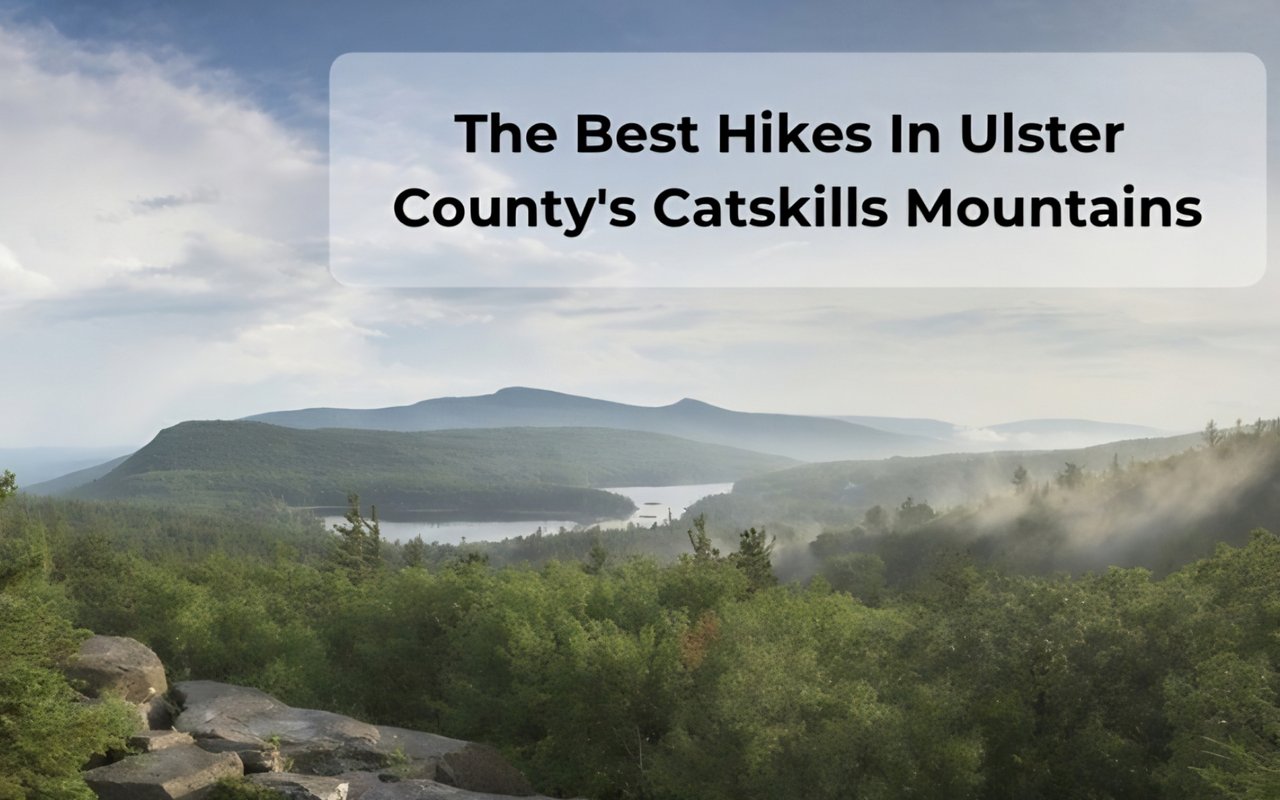
Because something is. The Ashokan Rail Trail isn't a finished piece of infrastructure sitting quietly along the reservoir. Right now, New York City's Department of Environmental Protection has an active forest management project underway on the stretch between Glenford Dike and milepost marker K12, working to diversify the tree species and ages growing along the corridor. That's not maintenance in the ordinary sense. That's the forest itself being deliberately reshaped, and the section where it's happening isn't the section most people default to.
The Parking Lot That Fills First Isn't the One Worth Visiting Most
When the trail opened in the fall of 2019, built by Ulster County in partnership with the NYC DEP, it gave the public access to the reservoir's north shore for the first time in over a century. It caught on fast. Within its first six months it had drawn roughly 40,000 visitors, and the county was projecting 100,000 within the year, according to Chronogram's coverage at the time. That same reporting flagged something locals already knew from experience: the Woodstock Dike lot, being the most accessible from the Thruway and from West Hurley itself, is also the one that fills up first on a nice day. No new parking was added there.
That's the quiet trade-off built into this trail. The easiest entrance is the most crowded one, and the crowding has nothing to do with which stretch of the 11.5 miles is worth your time. It's just proximity. If you've only ever ridden or walked from Woodstock Dike, you've been getting the busiest few miles of a trail that gets progressively quieter, and more interesting ecologically, the farther west you go.
Here's how the three trailheads actually compare:
| Trailhead | Location | Distance from Thruway Exit 19 | What you'll find |
|---|---|---|---|
| Woodstock Dike | 1285 NY-28, West Hurley | 5.3 miles | Closest and busiest, near the Zena Road Stewart's Shop |
| Ashokan Station | 3045 NY-28, Shokan | 11.3 miles | Central, picnic tables, less crowded, near the active restoration stretch |
| Boiceville Bridge | 5080 Route 28A, Boiceville | 16.5 miles | Farthest west, crosses the Boiceville Trestle over the Esopus |
If you're picking a trailhead based on habit, you'll keep ending up at Woodstock Dike. If you're picking one based on what's actually worth seeing this season, Ashokan Station puts you closest to the work being done between Glenford Dike and K12, with fewer cars in the lot when you arrive.
What's Actually Different in the Middle of the Trail
The forest management project isn't cosmetic. The stated goal is to improve the vigor and resiliency of the tree cover around the reservoir by diversifying which species and age classes are growing there, which matters more in a working watershed forest than it would almost anywhere else. This is the forest that filters water headed toward New York City taps, and DEP treats the tree composition around it as infrastructure, not scenery.
You can see evidence of it if you know where to look. Riders posting on AllTrails have noted a wide swath of newly planted trees on the reservoir side of the trail just east of the Ashokan Station trailhead, part of a Catskill Center initiative to remove invasive species and put natives back in their place. It's not a finished restoration. It's young growth, visibly different from the older stands of red maple, birch, and eastern white pine that line most of the rest of the corridor, including the section that crosses the 525-foot boardwalk through protected wetlands.
The trail's engineering has its own layer of history built in. Just past the Ashokan Station stretch, the route crosses Glenford Dike, a 2,850-foot, 60-foot-tall structure completed in 1912 to let trains carry supplies and tourists into the area during the reservoir's original construction. It's the kind of detail that's easy to walk past without noticing, but it's why the trail sits where it does at all. The rail line existed to serve the dam, not the other way around.
The Quiet Half of the Trail Has the Better Wildlife Odds Too
Less foot and bike traffic tends to mean more wildlife sightings, and the western half of the corridor backs that up. Riders on both AllTrails and TrailLink have logged:
- Bald eagles soaring over the reservoir near the Ashokan Station stretch
- Ospreys, less common but reported by regular riders
- Beavers working near the middle sections, spotted close to their dams
None of this is guaranteed on any given ride. But it tracks with something basic about how wildlife uses a corridor like this. The busiest three miles nearest Woodstock Dike see the most consistent human presence, and animals adjust accordingly. The quieter stretch toward Boiceville and Ashokan Station is where you're more likely to actually see something.
The trade-off is real conditions, not just crowds. The surface is compacted crushed stone the whole way, ten to twelve feet wide and ADA accessible, but it runs closer to gravel with quarter-inch to half-inch stone in places, which matters if you're on narrow road tires. And ticks are a genuine consideration in the warmer months, especially if you step off the main path to get closer to the water. A pre-ride check is worth the ten seconds it takes.
Loop It Through Boiceville When You're Done
If you start or end at Boiceville Bridge, you're a short ride from one of Ulster County's better excuses to finish a long trail day with food that isn't an afterthought.
Bread Alone has been rooted in Boiceville since 1983, but the building most riders know today is a 2021-22 rebuild that turned it into a fully electrified, carbon neutral bakery and cafe running on a 366-kilowatt on-site solar array. They still bake with an Andre Lefort wood-fired brick oven, the same French tradition the original bakery was built on, alongside the newer electric ovens. It's a rare combination of old-world method and current infrastructure, and it happens to sit right off the trail's western end.
If you want something more casual, Boiceville has kept a family-run market in business since 1989, plus Hong Kong Chinese Restaurant and Ming Moon in nearby Shokan for a straightforward sit-down meal that doesn't require a reservation. None of it is destination dining. All of it is the kind of reliable, no-fuss stop that makes a long ride worth planning around, rather than an afterthought you scramble for on the drive home.
Ride It Like You Actually Live Here
The habit of defaulting to the closest trailhead makes sense for a quick evening walk. It makes less sense if you're trying to actually experience what's happening on this trail right now, in the season when a restoration project is visibly changing the middle stretch and the crowds are thinnest exactly where the interesting stuff is. The Ashokan Rail Trail rewards people willing to drive the extra six miles to Ashokan Station instead of settling for Woodstock Dike out of convenience.
That's true of most of Ulster County, honestly. The obvious choice is rarely the most interesting one, and the payoff usually sits a little farther down the road than people bother to look.
If you're weighing a move to this part of the Hudson Valley and want a read on what daily life actually looks like here, not just what a listing photo suggests, Taft Street Realty has spent close to two decades getting to know these towns from the inside. Work With Us when you're ready to talk specifics.